
What? Posting two days in a row? Am I ill?
Answer: Who knows? But consider this post both information and appreciation. I’m writing it here rather than on social media to give it some form of permanence, something that I can refer back to (as can anyone interested) when my new novel is released, and beyond.
Flesh of All Sorrows is a thriller–a dark one to be sure–but it’s also a twisted love letter to some great thrillers of the past and the people who wrote them. I won’t tell you what role these books play in Flesh‘s plot; I’ll leave that for the reader to discover. But I will tell you what they mean to me.
Born in 1955, I came of age in the late 1960s and the 1970s. I don’t remember the first thriller I read, but it must have made an impact on me because I haven’t stopped loving them since. And in the mid-70s, in particular, three novels were released that exploded my brain and rebuilt it into whatever it became. Those three were written by the gentlemen I sometimes refer to as the Three Gs: William Goldman, Thomas Gifford, and James Grady.
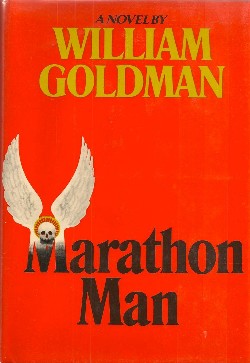
Goldman, I discovered through the movies–1969’s Butch Cassidy and the Sundance Kid, in particular. I loved westerns even before I loved thrillers, and here was a western movie that entertained, enthralled, and taught things about storytelling, about history, about characterization, and about friendship. Upon my first viewing I was hooked, and it’s remained a favorite ever since. I remembered the screenwriter’s name, and when I later discovered that he also wrote books, I started reading them as soon as they were released (in addition to going back and picking up his older ones). Marathon Man—a perfect thriller—was the first I read, and it became another great movie. Gripping from start to finish, with twists and turns perfectly placed. It’s a combination of incredibly unlikely situations all joined together in such a way that you believe them, which is a hard thing to pull off. He wrote other terrific novels–Magic, a brilliant novel of psychological terror, of course The Princess Bride, which was also a classic fantasy/romance film, even his early epic Boys and Girls Together, about young adults trying to find themselves (and one another) in 1960s New York City. If anyone has ever written dialogue better than Goldman, I’d love to see it. I haven’t yet.
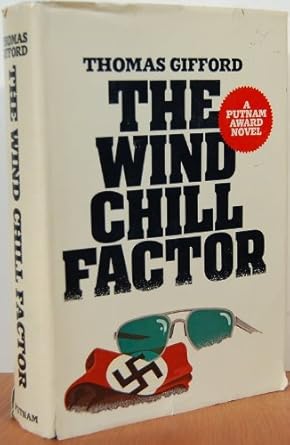
Thomas Gifford is the one about whom I know the least, in part because he died too young–at only 63, in 2000. His first novel, The Wind Chill Factor, was published by Putnam as part of its $15,000 Putnam Award program (then and now, a pretty good advance for a novel, although a few handfuls of writers make many multiples of that). It was written in an era when books about Nazis once again raising their heads was kind of a trend–think Marathon Man, Levin’s The Boys from Brazil, and Forsyth’s The Odessa File, for example, and Gifford pulled it off brilliantly. He followed it up with the deliciously twisty The Cavanaugh Quest, and became an international bestseller with The Glendower Legacy. Gifford also wrote under the names Dana Clarins, Thomas Maxwell, and co-authored one book as Lisa Drake.
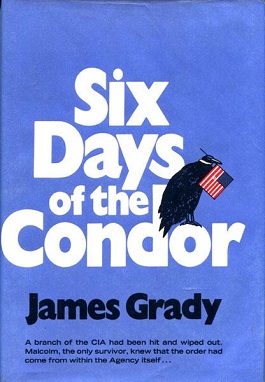
Finally, James Grady’s first novel, Six Days of the Condor, became yet another Robert Redford film classic as Three Days of the Condor. But the book stands on its own as another great 70s thriller, one more closely tethered to reality (and less concerned with Nazis) than the others. As with Goldman, that movie introduced me to Grady’s work, and I’m glad it did. Grady revisits Condor from time to time, but he also wrote some terrific private eyes books about John Rankin, and other works primarily about crime and/or espionage and politics. I’ve just finished his most recent book, American Sky, and it’s an enthralling tale of growing up in our time–his time and my time, anyway (Grady is six years older than me, essentially of the same generation). Everything about it rings true, and though some of it is certainly autobiographical, the things that Luc Ross experiences in the book are things that every boy growing into manhood experienced in those days. The book recalls the Vietnam War and the fears of being sent there, the knowledge that some who go will never come back. I still own a Special Forces windbreaker gifted to me by Crazy George, who did come back, but not in the state that he left–I keep it to honor him and the rest of the boys my age who went there and did their duty despite the war’s overall wrongheadedness. Luc also experiences the music of the day, discovers the Beach Boys and Bruce, sees the times changing in the pages of Playboy, experiences the temptations of women and liquor and dope. Like Grady and myself at his age, Luc’s ultimate career goal is to be a writer, and I have no doubt that he’ll make it.
Grady, the only one still living, has become a friend to both Marcy and me, thanks to the miracle of social media. He and Marcy share the commonality of growing up in Montana, he and I the experience of living in and around D.C., the love of Bruce Springsteen, and so much more.
Of the three Gs, only Gifford does not appear in Flesh of All Sorrows in one form or another (except as inspiration). As I said at the outset, telling you how Grady and Goldman show up–through their work, not in person–would be giving away too much, too soon. But they’re in there, literally as well as through the way they formed me at twenty years old, then a thriller writer-to-be.
All three writers deserve my great thanks, and all three deserve to be read, today and forever. Through their thrillers and their other books, they captured my American generation–its people, its loves, its fears, and its life. Nobody has explained it better.